
Team
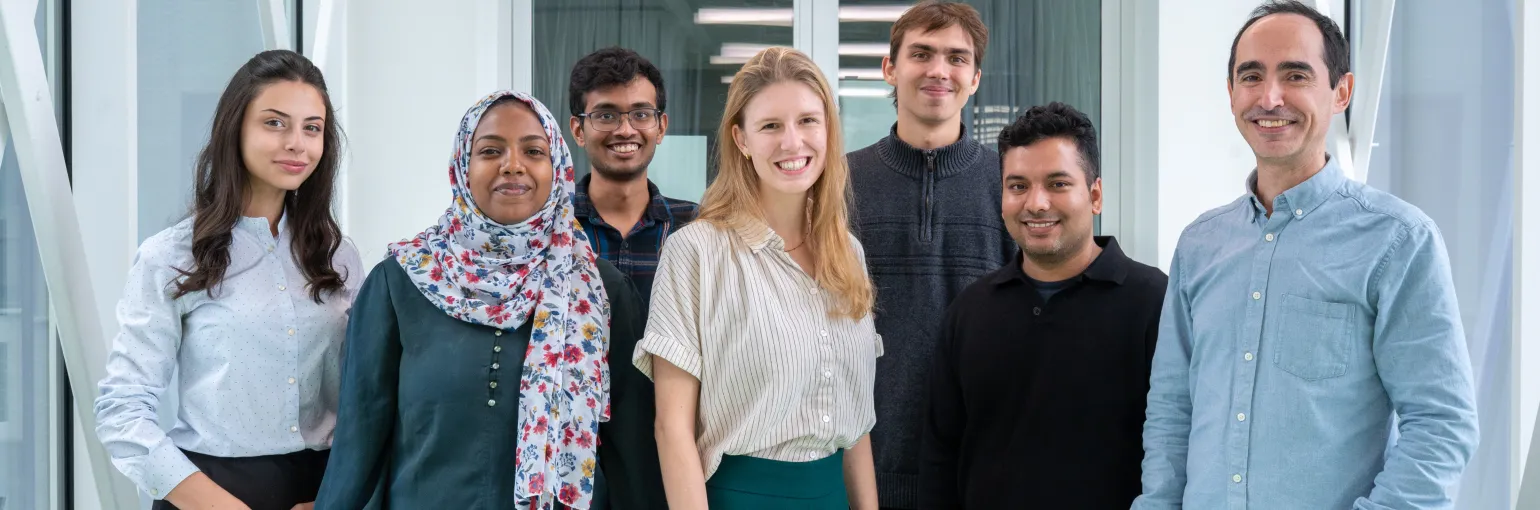
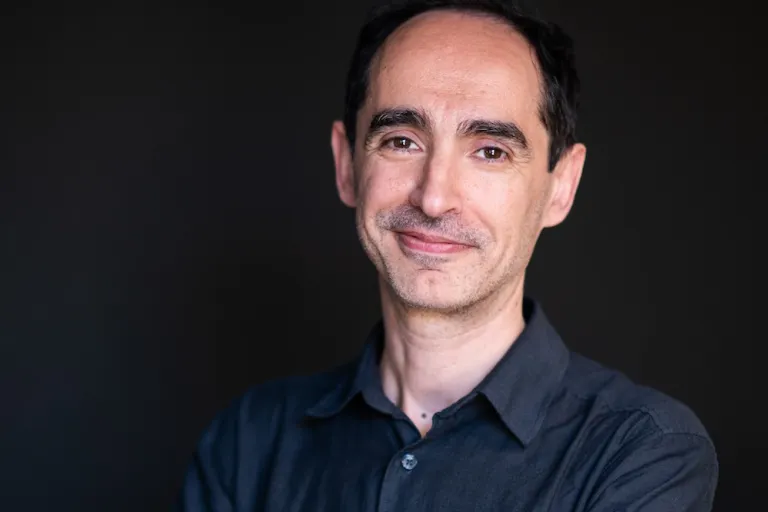
Pedro Gonçalves
Group leader
I am a Group Leader at VIB.AI, an Associate Professor at KU Leuven Departments of Computer Science and Electrical Engineering, and an affiliated PI at VIB-KU Leuven Center for Neuroscience.
Experimental methods to study the brain and behavior have advanced greatly in the past decade, generating large-scale and high-resolution data, which are increasingly hard to interpret. Our lab specializes in combining theoretical models and the most advanced machine learning methods to extract knowledge from such complex data so we can learn how the brain operates in health and disease.
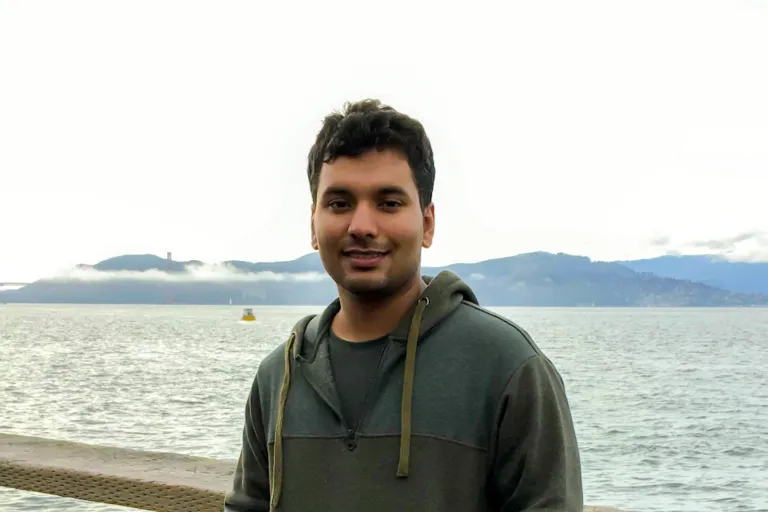
Abhishek Jha
Postdoc
I did my PhD (ELLIS) at ESAT, KU Leuven, under the supervision of Prof. Tinne Tuytelaars. During my PhD, I worked on learning dynamics of representation learning and its application in downstream tasks.
My current research at Goncalves lab, focuses on investigating the applicability of mechanistic approaches of systems neuroscience in contemporary machine learning models.
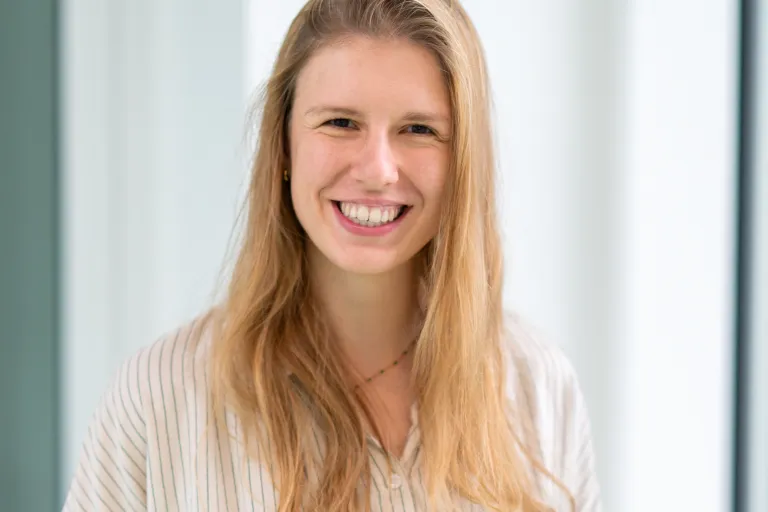
Anastasia (Nastya) Krouglova
PhD student
I hold an MSc in Computer Science (Artificial Intelligence) from the Vrije Universiteit Brussel (VUB), Belgium, and previously worked as a Research Intern at ETH Zürich, Switzerland. My research focuses on developing simulation-based inference tools to connect mechanistic models to experimental data and studying the mechanisms of short-term learning beyond synaptic connectivity in C. elegans.
Auguste Schulz
Michael Deistler
Hayden Johnson
PhD Student
I obtained a BSc in Computer Science from the University of Minnesota. After working as a researcher in Computational Neuroscience there, I am excited to join the Gonçalves lab for my PhD. In my project, we look to improve the computational efficiency of simulation-based inference by adaptively selecting the most informative parameters for our simulations, through a process of active learning.
Karthik Sama
PhD student
I completed an Integrated Master’s program in Computer Science at IIIT Bangalore, India. Subsequently, I worked as a software development engineer at media.net.
In this new career phase at the Gonçalves's lab, I am exploring the interplay between Natural Intelligence and Artificial Intelligence. My work focuses on building large-scale simulations of biological neuronal networks to deepen our understanding of the brain. I hope this research will contribute to developing more efficient and insightful approaches in AI.
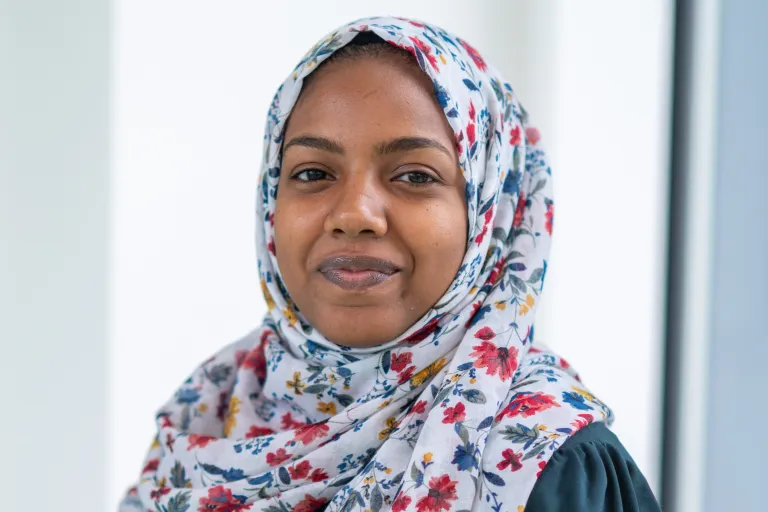
Najlaa Mohamed
PhD Student
I studied Electrical Engineering at the University of Khartoum, then joined Gonçalves lab for my master’s thesis on modeling early-life stress in mice with probabilistic machine learning. Now, continuing as a PhD student I'll be integrating Bayesian methods with representation learning techniques to study the functional organization of neural systems in health and disease.
Alice Marraffa
PhD student
I trained as a Physicist and I obtained a MSc in Neural Systems and Computations from ETH Zurich and the University of Zurich, and then I worked for one year as a research assistant in Haller's group in ETH for Data-Driven Modelling of Nonlinear Dynamical Systems. As a PhD student in Gonçalves lab, I will work on characterizing the geometry and dynamics of robust neural circuits with probabilistic modeling.

Zinaida Barseghyan
MSc student
On my way to acquiring BSc in Biochemical Engineering at KU Leuven I had joined the Goncalves lab where I created tutorials on simulation-based inference (SBI) techniques using in silico neurons and their networks. Now, as I am continuing my education in the program of Master of Bioinformatics, my research in the lab focuses on the development of a framework for the optimization of experimental designs in neurons applying SBI and Bayesian Optimization.
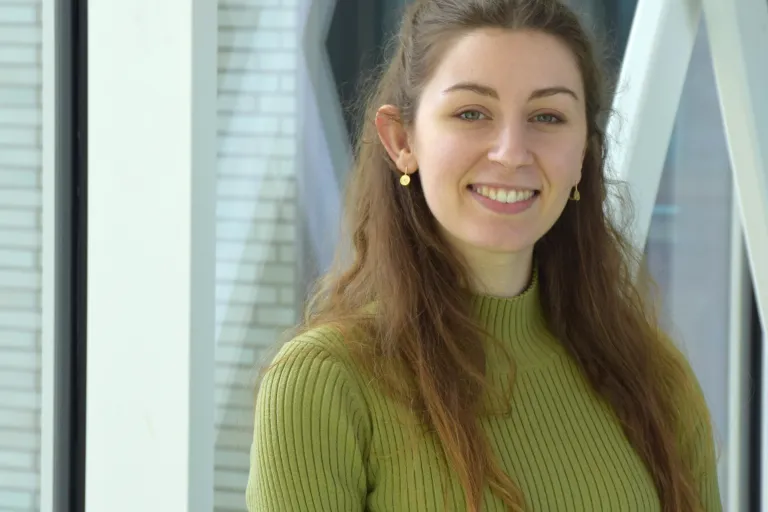
Ginevra Beltrame
MSc student
After a BSc in Physics, I am now completing a MSc in Physics of Data at the University of Padova, during which I primarily explored the connections between complex systems and AI. I joined the Goncalves lab for a collaboration on my final thesis project, which is focused on the application of Simulation-Based Inference parameter tuning techniques to Spiking Neural Network models.